

Neutral Grounding Resistors (NGR) Explained: What They Are, How They Work, and Why They Matter?
Contents
What Makes a Neutral Grounding Resistor Essential in Modern Power Systems?
In electrical power systems, ensuring the protection of personnel and equipment from fault currents is vital. Neutral Grounding Resistors (NGRs) serve this exact purpose by controlling the magnitude of fault current during ground faults, thereby minimising damage and improving safety.
What is a Neutral Grounding Resistor (NGR)?
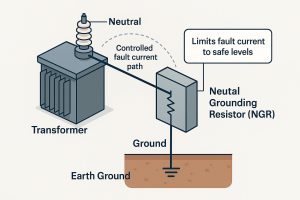
A Neutral Grounding Resistor is an electrical device connected between the neutral point of a transformer or generator and ground. Its purpose is to limit the fault current to a safe value in the event of a ground fault.
How Does a Neutral Grounding Resistor Work?
When a single line-to-ground fault occurs, the NGR provides a resistance path for the fault current. By doing so, it restricts the current magnitude, reduces damage to equipment, and allows system operators to detect and clear the fault safely.
Example: For a 6.6 kV system, using an NGR with a resistance of 38 ohms can limit the ground fault current to around 100 A, which is well within protective relay thresholds.
Why Use an NGR Instead of Solid Grounding?
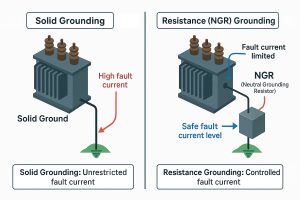
Solid grounding allows high fault currents, which can damage equipment and pose safety hazards. NGRs reduce the fault current to manageable levels, prevent arc flash incidents, reduce mechanical stress, and improve overall system reliability.
Where Are Neutral Grounding Resistors Used?
NGRs are widely used in medium-voltage and high-voltage systems in industrial facilities, substations, generator systems, mining operations, and petrochemical plants.
Types of NGRs and Their Design Characteristics
Neutral Grounding Resistors can be made of stainless steel or alloy resistors, enclosed in weather-proof or explosion-proof enclosures. They vary by resistance value, current rating, and time rating based on the application.
International Standards (IEEE 32, IEC) for NGRs
NGRs are typically designed in compliance with standards such as IEEE 32 and IEC 60034-1. These standards ensure safety, performance, and interoperability.
Related Reading: Reasons to Use A Neutral Grounding Resistor?
Looking for the Right NGR Solution? Explore Aktif’s Product Line
Aktif Elektroteknik offers custom-designed Neutral Grounding Resistors for various applications.
FAQ
Q: What does an NGR protect against?
A: It protects against high fault currents that could damage equipment.
Q: Is an NGR the same as a grounding resistor?
A: Yes, it’s a type of grounding resistor used in neutral points
Q: Can I use NGRs in renewable energy systems?
A: Yes, especially in wind and solar farms with medium-voltage setups.

